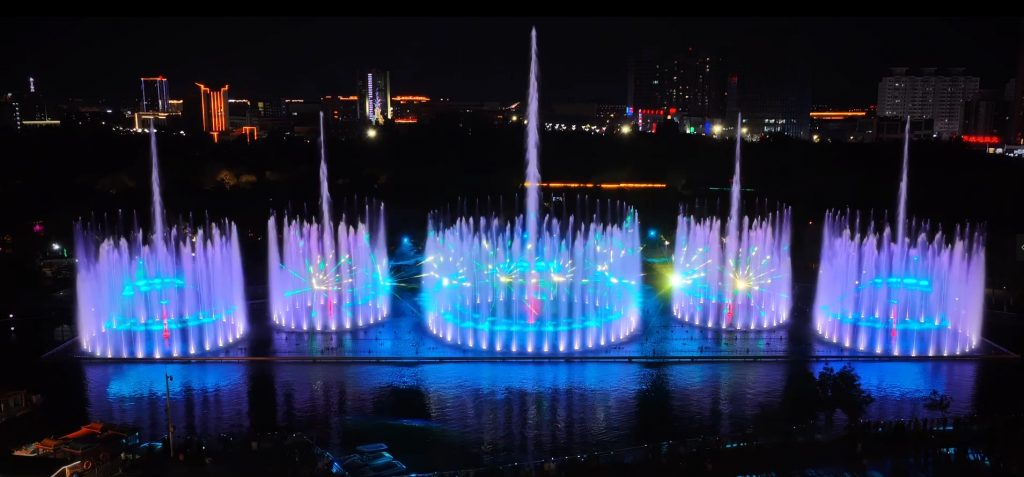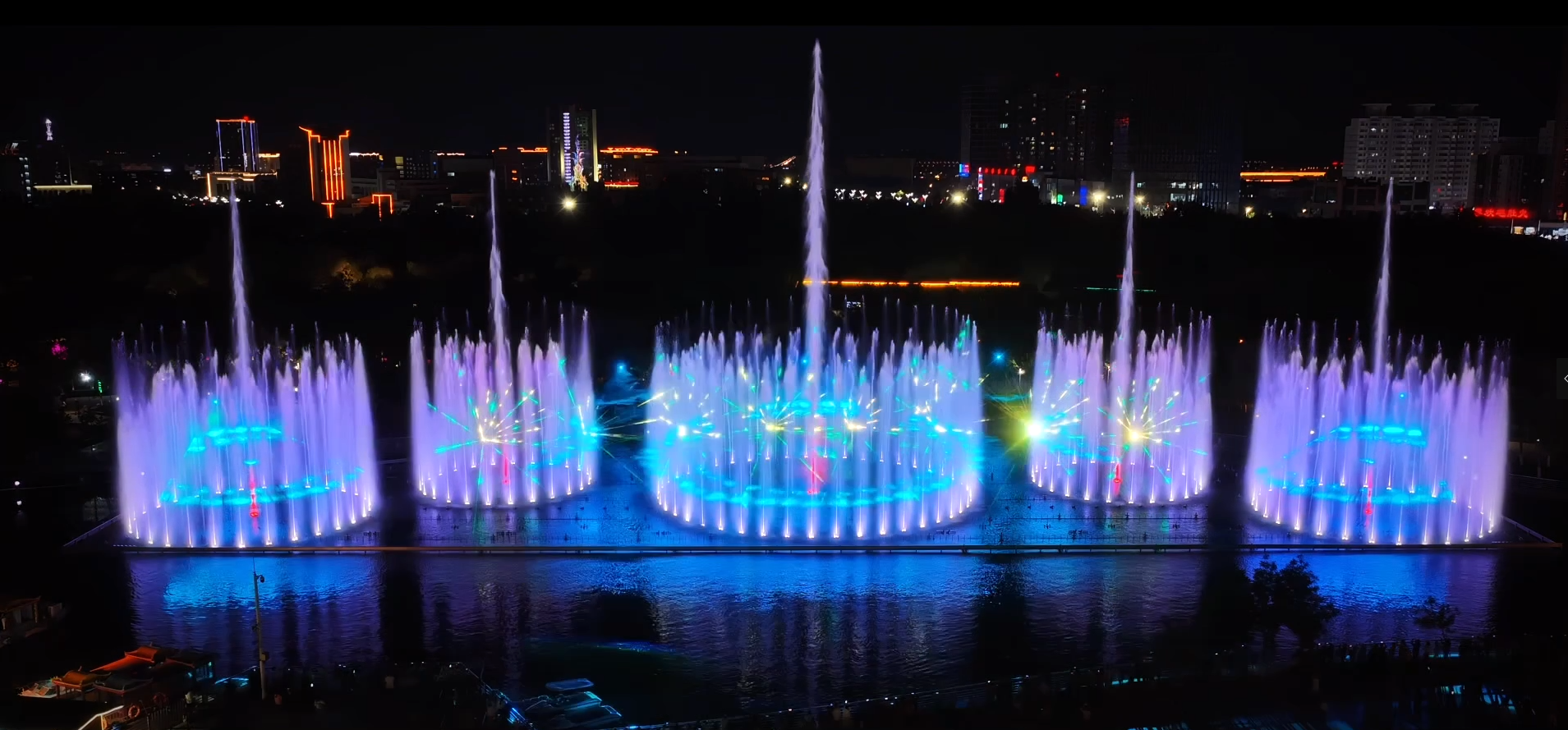
Dance fountains, also commonly known as musical dance fountains or synchronized water feature fountains, are modern, immersive water art installations that integrate dynamic water jets, colored LED lighting, background music, and intelligent control systems. Unlike traditional static fountains, they can follow the beat of the music, changes in melody, and the rhythm of the lighting to present a rhythmic, carefully choreographed “dance” of moving water. As a core landscape feature in urban cultural tourism, commercial spaces, and city parks, dancing fountains have become one of the most popular visual attractions for nighttime landscape experiences and urban lighting and beautification projects.
In recent years, with the upgrading of the urban night economy and the transformation of tourist attractions toward experiential design, custom dancing fountains, large-scale outdoor dancing fountains, and interactive dancing fountains have gradually become mainstream demands in the landscape engineering industry. This article provides a comprehensive overview of the core principles, technical advantages, suitable applications, selection criteria, and maintenance techniques for dance fountains, offering professional guidance for project developers, landscape architects, and procurement professionals.
I. What Is a Dance Fountain? Key Differences from Ordinary Fountains
Many people tend to confuse traditional decorative fountains with professional dance fountains, but there are fundamental differences between the two in terms of function, technology, and visual impact. A standard dance fountain possesses three irreplaceable core characteristics: synchronization, dynamism, and programmability.
First, the ultimate synchronization of sound and visuals. All water movements, lighting transitions, and color changes are precisely synchronized with the rhythm of the music. From gentle trickles and mist to soothing water curtains, and from high-pressure water columns soaring into the air to layered, three-dimensional water displays, they present rich, ever-changing visual effects.
Second, intelligent dynamic choreography. Powered by professional programming systems, water feature performances are no longer fixed or monotonous; designers can create customized water dance programs tailored to different musical styles, holiday themes, and scene atmospheres.
Third, multi-scenario adaptability. Whether it’s a small indoor decorative fountain or a large outdoor lake fountain, dancing fountains can adjust water jet height, rhythmic patterns, and lighting colors to suit the venue’s environment. Compared to ordinary fixed fountains with monotonous water patterns and static effects, dancing fountains offer greater visual appeal and scene interactivity—which is the core reason for their widespread use in high-end landscape projects.
II. Core Technical Principles of Modern Dancing Fountains
The stunning water dance performances of dancing fountains rely on mature intelligent control technology and professional hardware configurations. The core operating system of the entire setup consists of a PLC (Programmable Logic Controller) and a DMX512 lighting control system, which serve as the key technical foundation ensuring the fountain’s precise and stable operation.
The PLC intelligent programming system serves as the “brain” of the dancing fountain. Engineers pre-program specialized water dance routines to precisely control the start/stop, spray frequency, and jet height of each pump, achieving millisecond-level synchronization between the water display and the musical beat. The system supports multi-program switching, scheduled automatic operation, and remote control, meeting the dual needs of both routine daily performances and customized holiday shows.
The DMX512 full-color lighting control system is responsible for the overall lighting effects. It drives underwater full-color LED lights to produce a variety of lighting effects—including gradients, flickering, color shifts, and strobes—with the lights dynamically changing in response to the music and water flow, creating an immersive audiovisual spectacle that unites water, light, and sound. In addition, high-end dance fountains are equipped with 360° rotating nozzles, variable-frequency water pumps, and a recirculating water supply system. The rotating nozzles greatly enrich the variety of water patterns, while the recirculating water supply system effectively conserves water resources, significantly enhancing the system’s environmental performance.
Currently, advanced interactive dance fountains also feature infrared sensors and a song-request function for the audience. Visitors can trigger exclusive water feature effects through motion detection or select their favorite music programs, enabling immersive interaction between the fountain and the audience and significantly enhancing the overall experience.
III. Primary Application Scenarios for Dancing Fountains
Dancing fountains are highly adaptable and are widely used in various fields, including commercial, cultural tourism, urban public spaces, and real estate landscaping. Different scenarios can be matched with specific fountain types and customized design solutions.
3.1 City Squares and Cultural Tourism Parks
Large-scale outdoor dancing fountains serve as core landmark facilities in city center squares and cultural tourism parks. They are often designed around lakes or open bodies of water, featuring a wide spray range and spectacular light and shadow effects. Regular nighttime water dance performances attract crowds, extend visitor dwell time, and drive the development of the local nighttime economy, becoming a distinctive calling card for the city’s cultural tourism. Numerous well-known tourist cities in China have leveraged classic dancing fountain performances to gain massive social media exposure, significantly boosting their city’s profile.
3.2 Shopping Malls and Commercial Complexes
As high-value commercial landscapes, shopping mall dancing fountains effectively elevate the prestige of commercial spaces. Spectacular water dance performances continuously attract foot traffic, extend consumer dwell time, and drive secondary spending in dining, retail, and other sectors. At the same time, high-definition, visually stunning videos of these water shows spread easily on short-video platforms, bringing free, organic traffic exposure to commercial complexes and enhancing brand influence.
3.3 Resort Destinations and Theme Parks
Theme parks and resort destinations often integrate their own IP culture to create custom-themed dance fountains. By incorporating local culture, holiday themes, and distinctive music into the water show programming, they develop unique performance programs tailored to their attractions. This effectively addresses the lack of nighttime activities in these destinations, enriches the overall tourism experience, and comprehensively enhances the destination’s core competitiveness.
3.4 High-End Residential Communities and Resort Hotels
Small- to medium-sized, exquisite dance fountains are widely used in high-end residential communities, villa gardens, and resort hotels. They not only beautify the landscape and create an elegant, tranquil atmosphere but also elevate the project’s prestige and living comfort, serving as a key asset for driving sales and building brand image in real estate projects.
IV. Core Advantages of Investing in Dancing Fountain Projects
An increasing number of project investors are choosing to develop dancing fountain landscape projects, primarily because they offer multiple advantages, including high aesthetic value, high economic returns, and low operating costs.
First, they possess exceptional visitor attraction capabilities, driving economic growth. As an immersive performance landscape with extreme visual impact, dancing fountains possess a powerful ability to draw crowds. They can consistently attract residents and tourists to linger, driving foot traffic and consumption in surrounding commercial areas and generating sustained economic benefits for scenic spots, shopping malls, and urban night economies.
Second, strong social media virality enhances brand exposure. The spectacular water, light, and shadow performances easily inspire users to spontaneously share and spread the content, generating a massive amount of user-generated content across major social media platforms. Compared to traditional landscape features, dancing fountains possess a natural advantage in virality, effectively boosting the visibility and reputation of both the project and the city.
Third, they are energy-efficient, environmentally friendly, and low-maintenance. Modern dancing fountains utilize a fully recirculating water supply system, significantly reducing water waste; paired with energy-efficient variable-frequency pumps and low-power LED lighting, their operational power consumption is extremely low. Additionally, the intelligent control system operates stably and reliably, daily maintenance is simple, and the equipment has a long service life, making the project highly cost-effective.
Fourth, they offer flexible customization and adapt to all scenarios. Based on site size, budget, and thematic requirements, the scale of the water display, water patterns, music programs, lighting colors, and operating modes can be customized to perfectly meet the landscape design needs of various settings.
V. How to Choose a Professional Dancing Fountain Solution? Core Selection Tips
During the customization and procurement process for dancing fountain projects, many clients face issues such as inconsistent equipment quality and unprofessional design proposals. The following core selection criteria will help you avoid common industry pitfalls and choose high-quality water feature solutions.
First, prioritize system stability and synchronization accuracy. The core of a dancing fountain lies in the synchronized effects of water, light, and sound. Be sure to select equipment equipped with mature PLC and DMX control systems to ensure long-term operation free of delays, desynchronization, erratic water jets, or trembling water patterns, guaranteeing a stable and smooth performance.
Second, match the design to the specific setting. Large, open bodies of water are ideal for creating high-altitude jets and grand, spectacular water dance effects; indoor commercial settings are better suited for small-scale water features that are delicate, dynamic, and feature soft lighting and shadows. Professional manufacturers will tailor design solutions based on the site’s topography, water area, and intended use.
Third, prioritize material durability and equipment safety. Underwater nozzles, pumps, and lighting fixtures must be made of corrosion-resistant, waterproof, and rust-proof materials capable of withstanding the complex outdoor environment of prolonged exposure to wind and sun. Additionally, equipment must pass professional safety inspections to eliminate the risk of electrical leakage and ensure operational safety.
Fourth, verify customization capabilities and after-sales service. High-quality suppliers offer services such as personalized program customization, regular program updates, and remote debugging. A comprehensive after-sales maintenance system ensures the long-term, stable operation of fountain equipment and reduces operational risks down the line.
VI. Daily Operation and Maintenance Tips for Dance Fountains
A scientific maintenance plan can effectively extend the service life of dance fountain equipment and ensure consistent performance quality. Daily maintenance primarily consists of three key areas: regular cleaning, equipment inspections, and program debugging.
Regularly remove debris from water tanks, filters, and nozzles to prevent clogs that could affect water jet performance; routinely inspect pumps, electrical circuits, and lighting equipment to promptly identify safety hazards such as water leaks and electrical malfunctions; and apply anti-corrosion treatment to metal components during rainy and humid seasons. Additionally, water dance music programs can be updated periodically in response to holidays and seasonal changes to keep the performance content fresh and continuously enhance the project’s appeal.
VII. Frequently Asked Questions (FAQ) About Dancing Fountains
Q1: What is the difference between a dancing fountain and a musical fountain?
A: Within the industry, the two are essentially the same type of product, sharing the same core technology. Dancing fountains place greater emphasis on the dynamic choreography of water flows and a dance-like quality, while musical fountains prioritize synchronization with music as their core criterion. Modern intelligent water feature equipment has integrated both functions, and the two terms are used interchangeably in the industry.
Q2: Can dance fountains operate around the clock?
A: Professional dance fountain equipment, designed to be waterproof and lightning-proof, can adapt to typical weather conditions such as rain, overcast skies, and strong winds. Shutdown is required only during extreme weather—such as torrential rain, high winds, or freezing conditions—to protect the equipment from damage.
Q3: Are the operating costs for a dancing fountain project high?
A: Modern dancing fountains utilize energy-saving variable-frequency technology and water recirculation systems, resulting in extremely low daily water and electricity consumption. With minimal long-term maintenance costs, the overall operating costs are far lower than the economic and brand value returns they generate.