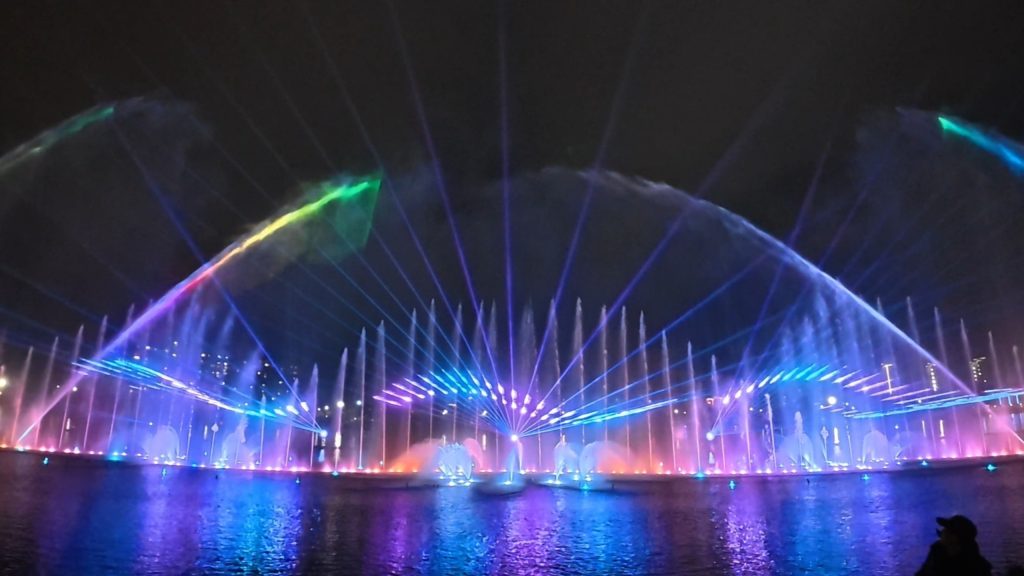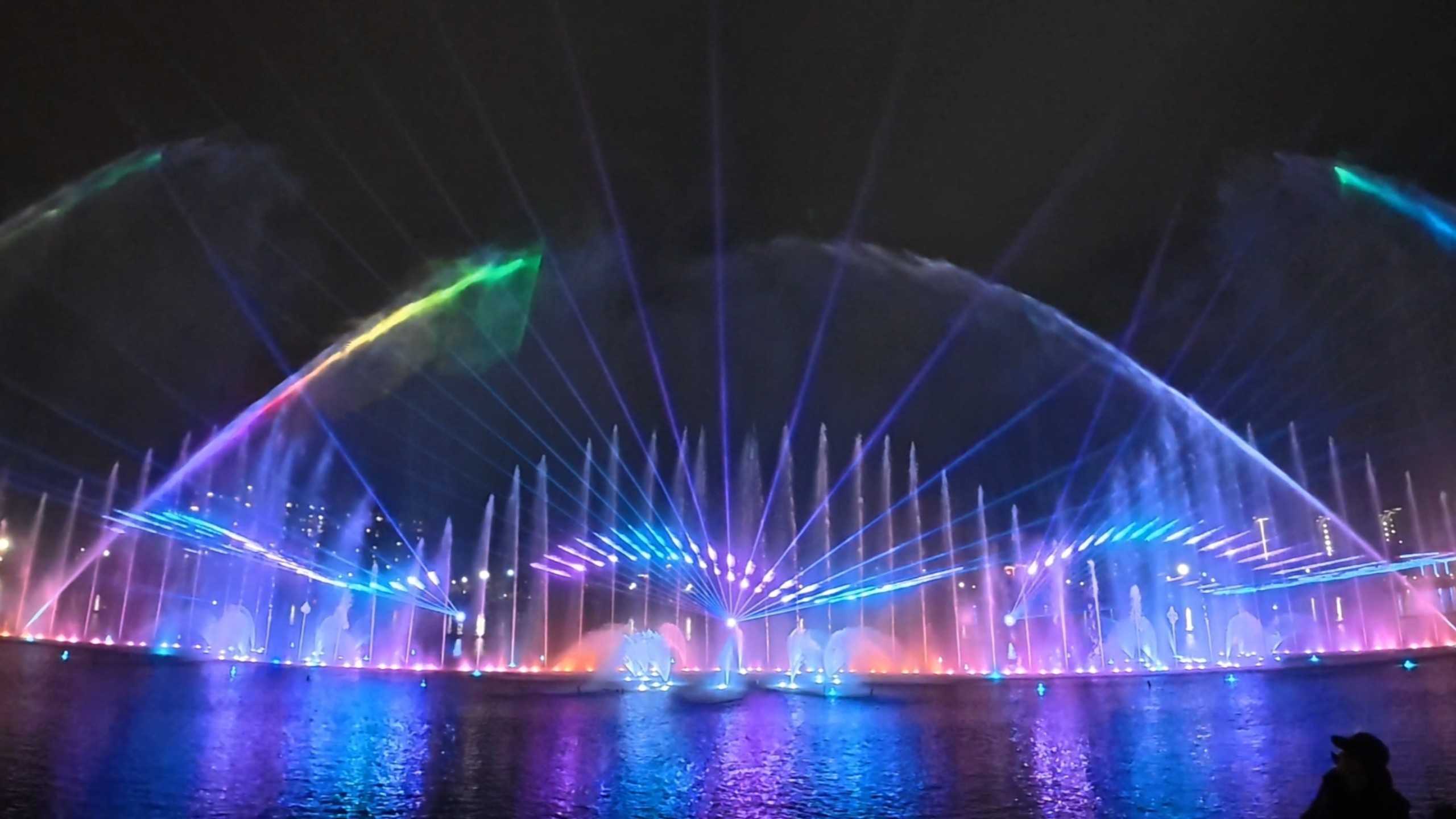
The whole process consists of eight phases: preliminary planning → schematic design → detailed construction drawing design → equipment procurement and manufacturing → on‑site construction and installation → system commissioning → trial operation and acceptance → post‑operation & maintenance. Artistic effects, waterscape safety, hydraulic‑electrical structures and music‑synchronized control shall all be taken into consideration.
I. Preliminary Planning and Site Survey
Project Requirement Confirmation
Clarify project positioning: plaza, scenic spot, commercial complex, river‑lake area or indoor space. Define fountain scale, performance duration, budget, performance forms (running fountain, swinging fountain, water‑screen movie, cold fog, lighting) and performance frequency.
On‑site Field Survey
- Site dimension and pool structure: new‑built pool or reconstruction of existing pool; water depth, bearing capacity of pool bottom and anti‑seepage performance of pool structure.
- Water source conditions: tap water, river water or lake water; water quality, water supply flow; conditions for drainage, overflow and water return.
- Power supply conditions: power supply points, voltage and power margin.
- Surrounding environment: wind direction, noise restrictions, distance to buildings and anti‑freezing requirements in winter.
- Civil engineering conditions: pump house location, space for equipment room and cable routing paths.
Data Collection
Collect general layout drawings, water supply & drainage drawings, electrical drawings and water level variation data of rivers and lakes.
II. Concept & Schematic Design (Artistic Scheme)
Thematic Creation
Determine the overall fountain style and compile performance scripts in combination with project culture.
Waterscape Arrangement Scheme
- Water pattern selection: straight jet, swinging jet, peacock‑tail display, dandelion jet, jumping fountain, water screen, super‑high water column, etc.
- Lighting configuration: underwater LED lights and color schemes; confirm whether to add laser, water‑screen movie and cold fog effects.
- Music track selection: select background music and develop multiple performance programs.
- Plane layout: arrange nozzles and lighting positions, and divide waterscape performance zones.
Effect Demonstration
Produce renderings and animated simulation videos, deliver scheme documents for review and final approval by the client.
III. Detailed Technical Design (Core Technical Phase)
1. Hydraulic Design for Water Supply and Drainage
Calculate flow rate and head of each nozzle to select matching water pumps. Adopt zoned water supply and determine pipe diameters for main pipes and branch pipes.
Pool system design: circulating filtration system, water replenishment, overflow, sewage discharge, wave resistance and anti‑freezing emptying.
Water quality treatment: filtration and algae removal. Extra water treatment shall be equipped for river‑lake water sources.
2. Electrical Control System Design
Calculate total load, select distribution cabinets and cables, and implement underwater safety protection. Safe‑voltage power supply is applied for all underwater equipment.
Music control system: audio decoder, PLC controller and frequency‑conversion control system to realize synchronization among music, water patterns and lighting.
Remote control: manual / automatic modes, scheduled start‑stop and fault alarm functions.
3. Civil Structural Design
Design pool body, pump house foundation, equipment base and cable trench with waterproof, anti‑seepage and winter anti‑freezing structures. For floating fountains on lakes, floating‑body structural design shall be completed.
4. Deliver Complete Set of Construction Drawings
Including: general layout drawing, nozzle layout drawing, piping system drawing, electrical schematic diagram, pump‑house layout drawing, civil‑engineering condition drawing and equipment list.
Important: The civil engineering contractor shall construct the pool, pump house and cable trench in accordance with the civil‑engineering condition drawing provided by the fountain designer.
IV. Customization, Manufacturing and Procurement of Equipment
Procure or customize equipment according to the equipment list: submersible pumps, various nozzles, underwater LED lights, frequency converters, music controllers, pipes & valves, floating bodies, water‑screen movie equipment, etc. Carry out factory inspection and anti‑corrosion & rust‑proof treatment for equipment.
V. On‑site Construction and Installation
Sequence: pump‑house equipment installation → pipe laying → nozzle & luminaire installation → cable laying and wiring
- Pump house: install water pumps, control cabinets, filters and valve pipelines.
- Fix in‑pool pipes and implement anti‑corrosion treatment for supports; conduct pipe pressure test to check for leakage.
- Install, position and calibrate nozzles and underwater lights; fit waterproof connectors for underwater cables.
- All cables shall be protected by conduits with earthing protection. Safe earthing is critical for fountain safety.
VI. System Commissioning
- Stand‑alone commissioning: test each water pump, light and nozzle individually to troubleshoot water leakage and wiring faults.
- Joint commissioning: activate control system linkage and test frequency‑conversion response.
- Music‑synchronization commissioning: import music programs, edit water‑pattern and lighting changes section by section, calibrate synchronization between musical rhythm and jet actions, and compile multiple performance programs.
- Adjust jet height, take water‑column drift caused by wind into account and optimize performance effects.
VII. Trial Operation and Completion Acceptance
Carry out 72‑hour continuous trial operation to inspect water leakage, equipment overheating, malfunctions and noise.
Adjust and optimize program effects.
Sort out completion documents: drawings, equipment certificates and operation manuals. Complete hand‑over upon client acceptance and provide training for operators.
VIII. Post‑Operation & Maintenance Phase
Carry out routine inspection, filter cleaning, nozzle descaling, winter water‑emptying for anti‑freezing, regular maintenance of electrical equipment and update of musical fountain performance programs.